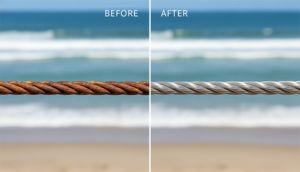
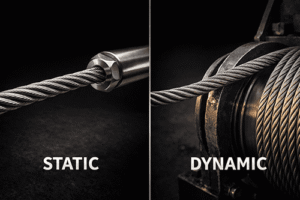
You have probably been told that 316 stainless steel[^1] is “marine‑grade” and the best choice for saltwater environments. Yet in real projects, you may still see rust, project delays and unexpected replacement costs. This guide explains the engineering reasons behind that.
In short, 316 stainless steel[^1] is highly resistant to rust, but it can still corrode under specific conditions – especially in areas with low oxygen, high chloride concentration[^2] or where its protective surface layer is damaged or contaminated. Understanding these conditions helps you design, specify and maintain stainless steel hardware correctly.

I’ve been in the metal products industry for 17 years, and I’ve seen this issue frustrate many clients. They invest in what they believe is the best material, only to see rust appear. It’s a common problem that often points back to a misunderstanding of how stainless steel actually works. Suppliers who promise that their 316 stainless steel[^1] will never rust are oversimplifying the science. The truth is more complex, but understanding it is the key to preventing costly failures. I’m here to share what I’ve learned to help you select rigging hardware that you can truly rely on.
A B2B buyer’s guide to stainless steel corrosion[^3]
As a buyer or project owner, you are constantly balancing cost, performance and risk. Vague claims about “rust‑proof” stainless steel do not help you make the right decision. You need clear failure modes and test data, not marketing language.
Understanding the main types of corrosion[^3] that affect stainless steel allows you to ask very specific questions: Which environments were these parts tested in? How were the surfaces finished and passivated? What certifications and test reports[^4] can the supplier provide? This is how you judge whether a product truly matches the demands of your application and long‑term safety requirements.

I remember a client, Mr. Xu, a senior engineer with over 30 years of experience. He was tired of suppliers who provided fake material certificates[^5] or products that failed prematurely. He knew that not all 316 stainless steel[^1] was created equal. The key is to understand how it can fail. Stainless steel's corrosion resistance[^6]www.iso.org/obp/ui/#iso:std:iso:8044:en)[^3] resistance comes from a thin, invisible layer of chromium oxide on its surface. This "passive layer" forms when chromium reacts with oxygen. If this layer is damaged or can't reform, corrosion[^3] can begin. The most common issues for marine applications[^7] are pitting and crevice corrosion[^8]n](https://www.iso.org/obp/ui/#iso:std:iso:8044:en)[^3], especially in saltwater, which is rich in corrosive chlorides.
Here's a breakdown of the common types of corrosion[^3] that can affect stainless steel:
| Corrosion Type | Description | Common Causes in Marine Environments |
|---|---|---|
| Pitting Corrosion | Localized form of corrosion[^3] that creates small holes, or "pits," in the metal. It can be difficult to detect, as the surface damage may be small, but the underlying damage can be deep. | High concentrations of chlorides (saltwater). Scratches or surface damage. |
| Crevice Corrosion | Occurs in tight spaces, like under bolt heads or between two overlapping plates, where oxygen is restricted. The lack of oxygen prevents the passive layer from reforming, creating an acidic environment that accelerates corrosion[^3]. | Gaps between fittings, under washers, or in threaded connections. |
| Galvanic Corrosion | Occurs when two different metals are in electrical contact in the presence of an electrolyte (like saltwater). The less noble metal will corrode faster than it would alone. | Contact between stainless steel and a less noble metal like aluminum or carbon steel. |
| Stress Corrosion Cracking (SCC) | A less common form of corrosion[^3] that occurs when the metal is under tensile stress in a corrosive environment. It can lead to sudden, unexpected failure. | High-stress applications in warm, chloride-rich waters. |
Understanding these distinctions is the first step. It transforms you from a simple buyer into an informed partner in your projects.
Common myths about passivation[^9] and real‑world performance
Many believe "marine-grade[^10]" means invincible. They're shocked when their expensive hardware shows rust. This myth stems from a misunderstanding of what makes stainless steel resistant in the first place.
The term "passivation[^9]" refers to the protective chromium oxide layer[^11], not a permanent coating. This layer can be compromised by chlorides in saltwater, leading to localized corrosion[^3] like pitting, even on high-quality 316 stainless steel[^1].

I once had a client who was building a high-end coastal railing system. They insisted on 316 stainless steel[^1], which was the right choice. However, during installation, the fabricators used tools contaminated with plain carbon steel. Tiny iron particles were left on the surface, which led to rust spots appearing within weeks. The client was furious and initially blamed the quality of my stainless steel.
This is a classic example of why understanding the details matters. The problem wasn't the material itself, but the contamination that prevented the passive layer from forming properly. This is where passivation[^9] as a chemical treatment comes in. A proper passivation[^9] process involves cleaning the stainless steel with an acid solution, like nitric or citric acid, to remove any free iron and other contaminants from the surface. This allows a clean, uniform, and robust chromium oxide layer[^11] to form, maximizing the steel's natural corrosion resistance[^6]www.iso.org/obp/ui/#iso:std:iso:8044:en)[^3] resistance.
However, even a properly passivated surface is not invincible. In marine environments, chlorides in sea spray and saltwater constantly attack this protective layer. When the passive layer breaks down at a specific point, pitting corrosion[^12]n](https://www.iso.org/obp/ui/#iso:std:iso:8044:en)[^3] can start.
You can think of this as a tiny pinhole in an otherwise sound coating. Corrosion becomes highly concentrated in that small area and can burrow deep into the metal, while the rest of the surface still looks clean from the outside.
How to choose the right stainless steel for your application
Faced with choices like 304, 316, and even more specialized alloys, it's easy to feel lost. Making the wrong choice can lead to premature failure, while over-specifying can unnecessarily drive up costs.
The best choice depends on a careful analysis of the specific environment. For applications with direct and constant saltwater exposure[^13], 316 stainless steel[^1] is the clear minimum. For less demanding or freshwater applications, 304 may be a cost-effective alternative.

Choosing the right stainless steel is about matching the material to the environment. For someone like Mr. Xu, who is procuring components for industrial clients[^14], making the right call is critical. It’s not just about saltwater; it's also about factors like temperature, exposure to chemicals, and the level of mechanical stress the part will endure.
The key difference between 304 and 316 stainless steel[^1] is the addition of molybdenum[^15] in 316. This element significantly enhances its resistance to chlorides, which is why 316 is often called "marine-grade[^10]." While 304 is an excellent all-purpose stainless steel, it is more susceptible to pitting in saltwater environments.
Here is a simplified guide to help you make an informed decision. In practice, you can start from your environment and project criticality, then match it to the most appropriate grade in this table:
| Grade | Key Characteristics | Best For | Avoid In |
|---|---|---|---|
| 304 Stainless Steel | Good corrosion resistance[^6]www.iso.org/obp/ui/#iso:std:iso:8044:en)[^3] resistance in most environments. More affordable than 316. | Freshwater applications, architectural trim, kitchen equipment, and areas not in direct contact with saltwater. | Direct saltwater exposure[^13] or environments with high chloride concentration[^2]s. |
| 316 Stainless Steel | Contains molybdenum[^15] for superior resistance to pitting and crevice corrosion[^8]n](https://www.iso.org/obp/ui/#iso:std:iso:8044:en)[^3] in chloride environments. | All marine applications[^7], including boat fittings, rigging, and coastal structures[^16]. Also ideal for chemical processing and medical equipment. | Highly specialized applications that may require even more resistant alloys (e.g., Duplex stainless steel). |
| Duplex Stainless Steels | Higher strength and even greater resistance to stress corrosion cracking[^17]//www.iso.org/obp/ui/#iso:std:iso:8044:en)[^3] cracking and pitting than 316. | Submerged applications, offshore platforms, and highly corrosive industrial environments. | Applications where cost is the primary driver, as it is more expensive than 316. |
For most coastal and marine projects, 316 stainless steel[^1] strikes the right balance between performance and cost. For highly critical or continuously submerged applications, it is worth evaluating duplex grades together with your engineering team, based on detailed corrosion[^3] data and project budgets.
Conclusion
Understanding that even so‑called marine‑grade 316 stainless steel[^1] can rust is not a sign of weakness – it is a mark of real expertise. It helps you set the right expectations, specify materials correctly and avoid expensive surprises later in the project.
Before approving a design or placing an order for stainless steel hardware in a marine or coastal project, ask yourself three questions: Is the selected grade suitable for the chloride level and temperature of this environment? Have pitting, crevice and galvanic corrosion[^18]n](https://www.iso.org/obp/ui/#iso:std:iso:8044:en)[^3] risks been considered in the design and installation? And can the supplier provide test reports[^4] and material certificates[^5] to support their claims? If you can answer “yes” to these points, you are far less likely to be surprised by rust on 316 in the field.
[^1]: Explore the unique properties of 316 stainless steel to understand its applications and limitations in marine environments. [^2]: Discover how chloride concentration influences the corrosion behavior of stainless steel. [^3]: Discover the different types of corrosion that can affect stainless steel and how to prevent them. [^4]: Explore the importance of test reports in verifying the quality and performance of stainless steel. [^5]: Understand the significance of material certificates in ensuring the quality of stainless steel products. [^6]: Understand the factors that influence the corrosion resistance of stainless steel in various environments. [^7]: Find best practices for selecting and maintaining stainless steel in marine environments. [^8]: Find out how crevice corrosion occurs and the best practices to avoid it in marine environments. [^9]: Discover the passivation process and its importance in enhancing the corrosion resistance of stainless steel. [^10]: Learn about the meaning of marine-grade materials and why they are essential for coastal and marine applications. [^11]: Learn about the crucial role of the chromium oxide layer in protecting stainless steel from corrosion. [^12]: Understand pitting corrosion, its causes, and how to mitigate its effects on stainless steel. [^13]: Learn about the effects of saltwater exposure on stainless steel and how to choose the right grade. [^14]: Learn what industrial clients need to consider for selecting the right stainless steel for their projects. [^15]: Explore how molybdenum improves the corrosion resistance of stainless steel, especially in marine applications. [^16]: Discover the best materials for coastal structures to ensure durability and longevity in harsh environments. [^17]: Explore the phenomenon of stress corrosion cracking and its implications for stainless steel applications. [^18]: Learn about galvanic corrosion and how to prevent it when using different metals together.