Sourcing rigging hardware from China can feel like a gamble. A wrong choice can lead to project delays, costly failures and serious damage to your reputation with clients. This guide shows you how to systematically verify suppliers so you can choose a long‑term, reliable partner instead of guessing.
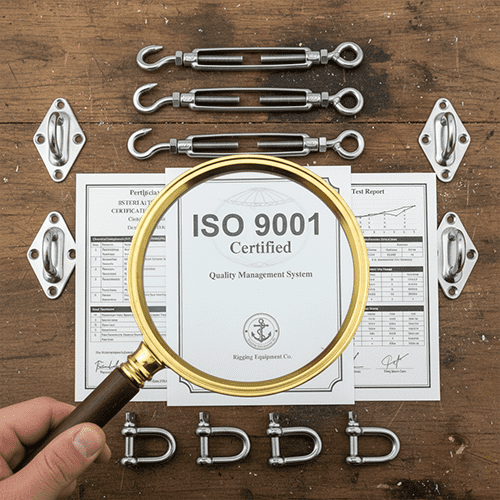
To verify a manufacturer, focus on objective evidence. Request a valid ISO 9001 certificate[^1], a batch‑specific Material Test Certificate (MTC)[^2], recent load testing reports[^3] and, where possible, a third‑party or live factory audit. A trustworthy partner will share these documents and details proactively, without hesitation.
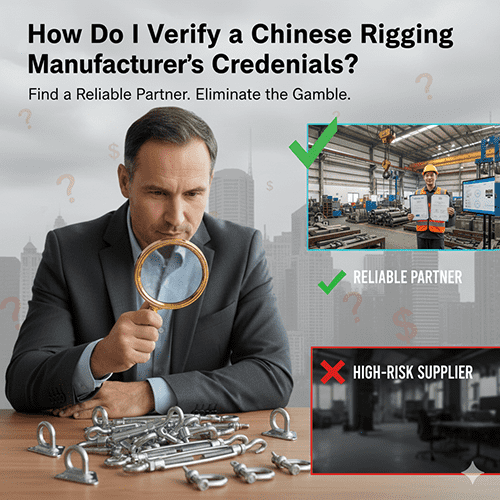
After 17 years in this industry, I have seen everything. I've seen buyers get misled by slick websites and low prices, only to receive products that fail under pressure. I understand your hesitation. The distance and language barrier can make it feel impossible to know who to trust. But it's not impossible. You just need a system. I'm going to give you my personal checklist—the same one I use when evaluating potential partners. This isn't about finding the cheapest supplier; it's about finding a partner who will protect your project and your business.
A checklist for global sourcing: from ISO 9001 to material test reports
You have a list of potential suppliers, but their websites all look the same. How do you separate the serious manufacturers from the risky trading companies[^4] or low-quality factories?
Use a simple verification checklist. Focus on four key documents: a valid ISO 9001:2015 certificate, a batch-specific Material Test Certificate (MTC)[^2], recent load testing reports[^3], and proof of a physical factory. These documents are your first and best line of defense.
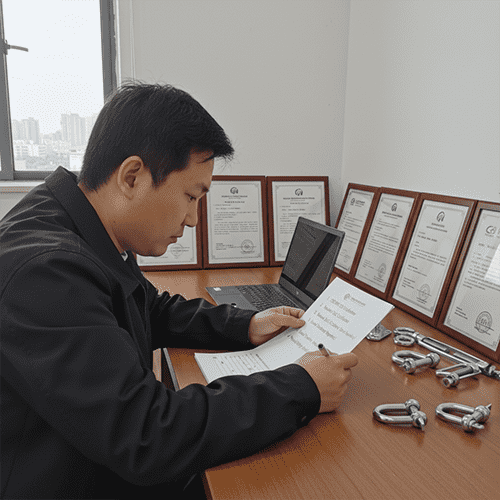
You can treat these documents as the manufacturer’s technical résumé[^5]. A company that cannot provide them, or provides only vague versions, is signalling that something important is missing. In my early days, I trusted a supplier’s verbal promises and ended up with a batch of turnbuckles that did not meet the required strength, creating a serious loss for my client. Since then, I never move forward without verifiable documentation[^6].
The ISO 9001 certificate[^1] shows they operate a repeatable quality management system[^7]. The MTC proves the chemical composition[^8] of the stainless steel you are buying. Load test reports confirm that the hardware actually meets the breaking strength you need. These are not “just papers” – they are your primary tools to manage risk and protect both safety and your reputation. A serious manufacturer is proud to share them, because they have invested time and money to earn them.
Your Essential Verification Checklist
| Document/Action | What It Is | Why It's Critical |
|---|---|---|
| ISO 9001:2015 | International standard for a Quality Management System (QMS). | Ensures consistent processes, quality control[^9], and traceability. |
| Material Test Cert (MTC) | A report detailing the chemical analysis of the raw material batch. | Proves you are getting real 316 or 304 steel, not a cheaper grade. |
| Load Test Reports | Documentation of a product's breaking strength test results. | Verifies the hardware meets the safety and performance specs[^10] you need. |
| Factory Video/Audit | A live video tour or a third-party inspection of the facility. | Confirms they are a real manufacturer, not just a trading office. |
Red flags to watch for when choosing an OEM/ODM supplier
The price from one supplier is significantly lower than all the others. It feels too good to be true, but you are under pressure to reduce costs. How do you spot a dangerous deal?
Watch out for these red flags: prices far below the market average, vague answers about quality control[^9], an unwillingness to share certificates, and a lack of a professional website or contact information. These are all signs of a high-risk supplier you should avoid.
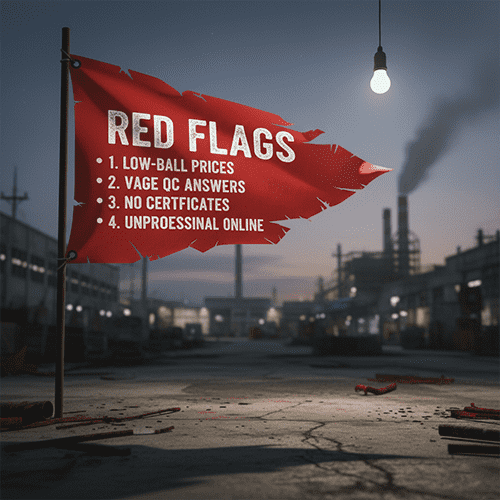
If a price seems too good to be true, it usually is. The cost of quality stainless steel[^11] and proper processing is largely driven by global commodity prices and labour; no one has a truly secret, stable, cheap source. A quotation that is 30% or more below the general market level almost always means corners are being cut somewhere.
That could mean using an inferior grade of steel, skipping essential heat treatment steps or operating with little to no real quality control[^9]. I once received a quote for stainless steel shackles that was actually lower than the raw steel cost at that time – an immediate signal to walk away. Reliable manufacturers invest in certified materials, testing equipment and skilled workers. A supplier who avoids discussing these topics is already giving you a clear warning.
Common Red Flags and What They Mean
| Red Flag | What It Really Means |
|---|---|
| Unrealistically Low Price | They are using substandard materials or skipping essential production steps. |
| "Don't worry, it's good quality" | They have no formal QC process and cannot provide data to back up their claims. |
| Refusal to Provide MTC Before Order | They either don't have it, or they know it will not meet your specifications. |
| Acts as a Trading Company, Not a Factory | They have no control over production, quality, or lead times. You are adding risk. |
Questions every B2B buyer should ask before placing a bulk order
You're ready to talk to a supplier. You need to move beyond the sales pitch and find out if they are truly capable of being your partner. What should you ask?
Before you order, ask specific, technical questions. Ask: "Can you send the MTC for our specific batch before shipping?", "What is your load testing frequency?", and "Can we schedule a live video tour of your production line next week?". Their answers will reveal their competence.
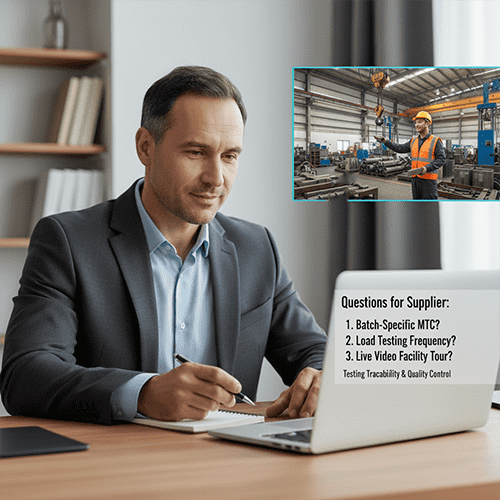
This is your interview of them. You are in control. A good supplier will welcome these questions. A bad one will get defensive or give vague answers. When you ask for a batch-specific MTC, you are testing their traceability. When you ask about load testing frequency, you are probing their commitment to ongoing quality control[^9], not just a one-time certification. Asking for a live video tour is the ultimate test. A real manufacturer with a well-run facility will be proud to show you their machines, their raw material stock, and their testing equipment. A trading company working out of a small office cannot do this. Their hesitation, or their excuses, will give you your final answer. These questions cut through the noise and get to the truth of their operation.
Key Questions and What to Listen For
- Your Question: “Can you provide the MTC for our exact production batch?”
- Good Answer: “Yes, we will issue the batch‑specific MTC once the raw material is assigned to your order.”
- Bad Answer: “We provide a general certificate for all products.”
- Your Question: "What is your process for quality control[^9] during production?"
- Good Answer: "We have in-process checks at 3 stages and a final inspection for dimensions and finish."
- Bad Answer: "We have a guy who checks things at the end."
- Your Question: "Can we see your load testing machine in a video call?"
- Good Answer: "Of course. When works for you?"
- Bad Answer: "Our testing machine is currently under maintenance."
Conclusion
Verifying a Chinese manufacturer is not about guesswork or instinct. It is about asking the right questions and insisting on objective proof. When you treat supplier selection as a structured process instead of a one‑time gamble, you greatly reduce the risk of costly mistakes.
Before you place a bulk order, ask yourself three things: Do I have current certificates and reports for this supplier, not just promises? Have I seen evidence that they are a real manufacturer with control over production and testing? And have I compared their price level with the market to make sure it is realistic for the quality I expect? If you can answer “yes” to these checks, you are much closer to working with a transparent, reliable long‑term partner.
[^1]: Understanding ISO 9001 can help you ensure quality management in your supplier's processes. [^2]: Learn how MTCs verify the material quality, ensuring you receive the right specifications. [^3]: Discover how load testing reports confirm the safety and performance of your hardware. [^4]: Identifying the differences can help you choose reliable partners for your sourcing needs. [^5]: Understanding this concept can help you evaluate a supplier's qualifications effectively. [^6]: Understanding the importance of documentation can protect you from potential supplier risks. [^7]: Discover how a robust quality management system ensures product consistency and reliability. [^8]: Learn how material composition affects product performance and safety. [^9]: Learn about quality control practices that ensure consistent product quality from suppliers. [^10]: Understanding these specs can help you ensure the safety and effectiveness of your products. [^11]: Learn about the economics of stainless steel to avoid unrealistic pricing from suppliers.