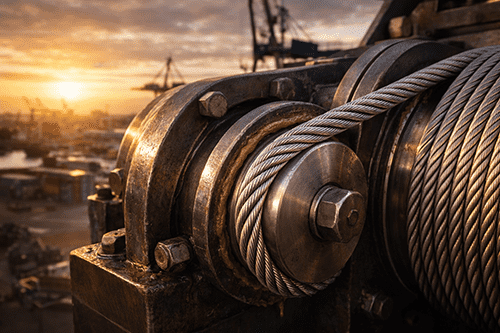
Using the wrong wire rope in your winch or pulley system leads to rapid fraying and catastrophic failure. This downtime is costly and dangerous. How do you prevent this wear?
Based on my 17 years in rigging hardware, the answer is 7x19 wire rope. Its highly flexible construction, with 133 individual wires, is specifically designed to bend repeatedly over sheaves, drastically reducing metal fatigue[^1] and maximizing the operational life and safety of your machinery.
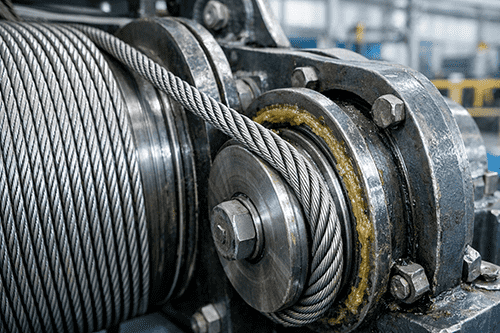
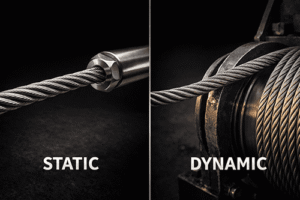
Selecting the right wire rope is crucial for any dynamic application where the cable is in constant motion. The repeated stress of bending and unbending is an engineering challenge that directly impacts both rope longevity and system safety. While stiffer ropes have their place, they are guaranteed to fail prematurely in a high-cycle environment[^2]. Let's explore exactly why the specific construction of 7x19 is the only professional choice.
Why does flexibility matter more than abrasion resistance[^3] in pulleys?
A tough-looking, stiff wire rope seems like it would last longer. But when it runs over a pulley, it quickly breaks down. This unexpected failure can bring your entire operation to a halt.
In dynamic systems, metal fatigue[^1] from bending is the primary cause of failure, not surface abrasion. The 7x19 construction, with its numerous fine wires, distributes bending stress effectively. This prevents the microscopic cracks that lead to wire failure, making flexibility the most critical factor for longevity.
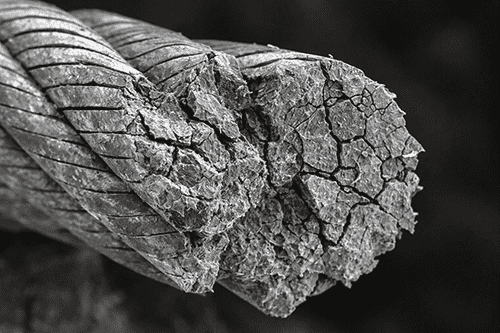
Let me explain the idea of metal fatigue[^1] in a simple way. Every time a wire bends, it is put under stress. A stiff rope, like the 7x7 construction used for railings, has thick outer wires. When you force these thick wires around a pulley, which is also called a sheave, the stress is very high and focused. It is like bending a thick paperclip back and forth; it breaks very quickly. In contrast, a 7x19 rope is like a bundle of very thin paperclips. Each of its 133 individual wires bends only a very small amount. This distributes the load and stress evenly across all the wires. This "flexibility through numbers" is what gives 7x19 wire rope its excellent resistance to fatigue. The thinner outer wires of a 7x19 rope might not resist scraping against a rough surface as well as a 7x7 rope. However, this is a secondary issue in a well-designed pulley system, where the rope should only touch the smooth bottom of the sheave's groove. For any machine like a winch, crane, or hoist, you must choose flexibility over abrasion resistance[^3] to build a safe and long-lasting system.
| Property | Importance in Pulley Systems | Why 7x19 is the Solution |
|---|---|---|
| Fatigue Resistance | CRITICAL | High number of wires distributes bending stress. |
| Flexibility | CRITICAL | Easily conforms to the curve of the sheave. |
| Abrasion Resistance | Secondary | Thinner wires are less resistant, but not the main problem. |
| Breaking Strength | Important | Has a slightly higher breaking strength[^4] than 7x7. |
How does sheave diameter affect the life of a 7x19 rope?
You selected the correct 7x19 rope for your machine, but it is still wearing out too fast. You might blame the rope, but the real problem could be the size of your pulley.
Even the most flexible 7x19 rope will break down quickly if you run it over a pulley that is too small. A small pulley forces the rope to make a very tight bend. This tight bend greatly speeds up metal fatigue[^1]. Using a larger pulley reduces this stress and will make your rope last much longer.
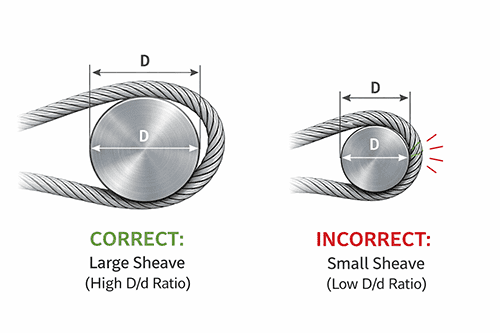
There is a very important rule in the rigging industry called the D/d ratio[^5]. Here, 'D' stands for the diameter of the sheave, and 'd' stands for the diameter of the wire rope. The bigger this ratio is, the less stress is placed on the rope when it bends. I have seen many ropes fail too early in factories. This often happens because an engineer chose a pulley that was too small to save space or money. For 7x19 wire rope, the industry recommends a D/d ratio[^5] of at least 25 to 1. For example, if you use a 1/4 inch rope, the diameter of your pulley's groove should be at least 6.25 inches. If you use a smaller pulley, you force the 133 wires inside the rope to bend too sharply. This causes them to fatigue and break very quickly. It is a basic engineering rule that people often forget. So, before you think the rope is low quality, you should check the size of your pulley. A good system depends on the rope and the hardware working together correctly.
How do you verify the quality and construction of your 7x19 rope?
Your supplier sent you a reel of wire rope, and the label says "7x19." It looks correct, but can you be sure? If you install the wrong type of rope by mistake, it could lead to a very dangerous equipment failure.
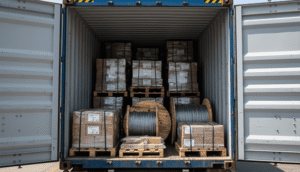
Looking at the rope is not enough to be sure. As a manufacturer with many years of experience, I can tell you that real proof comes from paperwork. You must ask for a Material Test Certificate[^6] (MTC) to check the steel grade. You should also demand a factory load test report[^7] that shows the breaking strength[^4] and confirms the 7x19 construction.
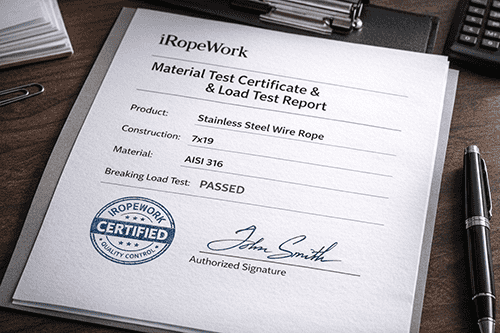
Shipping mistakes can happen. Also, many trading companies do not know the difference between rope constructions themselves. They just send you whatever they get from the factory. A few years ago, a client who builds custom winches[^8] called me. His ropes were wearing out very quickly. He had been buying 7x19 rope from a general hardware supplier for years without any problems. I asked to see the paperwork for his most recent shipment. He did not have any. We got a piece of the rope and checked it. It was actually 7x7 rope. The trading company had changed its factory supplier and did not tell him. The new factory shipped the wrong product. This happens often. At iRopeWork, we stop this problem from happening because we are the manufacturer. Our process includes clearly marking the construction on all shipping documents and providing a full set of paperwork. This includes the MTC to prove it is real Type 304 or 316 stainless steel, plus our own test reports. This is not just extra paper. It is your only guarantee that the rope you are installing is the correct one to keep your machine running safely.
Conclusion
For pulleys and winches, 7x19 is the only choice. Its flexibility is key to a long service life. Always verify construction with test reports to ensure the safety and reliability of your equipment.
[^1]: Understanding metal fatigue is crucial for maintaining the safety and efficiency of your rigging systems. [^2]: Understand the challenges faced by wire ropes in high-cycle environments and how to mitigate them. [^3]: Understand the role of abrasion resistance in wire ropes and its impact on performance. [^4]: Discover the key factors that determine the breaking strength of wire ropes for safe operations. [^5]: Discover the significance of the D/d ratio in reducing stress on wire ropes for better performance. [^6]: Find out why MTCs are essential for ensuring the quality and safety of your wire rope. [^7]: Learn how load test reports verify the strength and reliability of your wire rope. [^8]: Explore important considerations for designing and building custom winches for optimal performance.