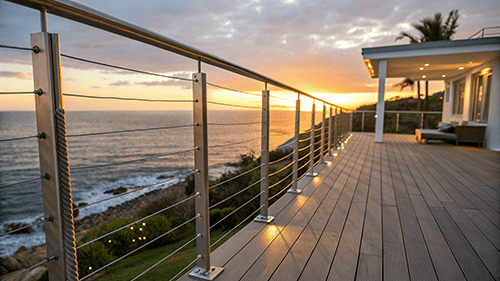
Your new cable railing looks perfect, but months later, it sags and looks unprofessional. How do you prevent this? The secret lies in using the right wire rope construction from the start.
Based on my 17 years of manufacturing experience, 7x7 wire rope is the standard for cable railings for two key reasons. Its stiff construction prevents sagging under tension, and its thicker outer wires provide superior resistance to abrasion, ensuring a long-lasting, clean, and safe installation.
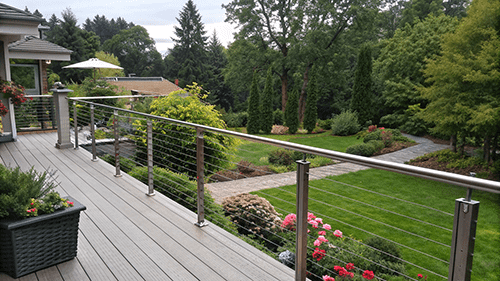
Choosing the right components is the difference between a project that lasts for decades and one that requires constant maintenance. For architectural railings, the wire rope must do one job perfectly: remain taut and straight under tension for years. While other, more flexible ropes might seem similar, their internal structure is not suited for this static application. Understanding why 7x7 construction is engineered for this specific purpose is the first step toward building a railing system you can rely on.
Why is a stiffer rope better for maintaining tension in railings?
A beautiful new cable railing looks loose and wavy after one season. Constant re-tightening is a maintenance headache and points to a fundamental problem. You need to start with a naturally stiff rope.
A stiffer rope like 7x7 has minimal constructional stretch[^1]. When you tension it correctly during installation, it experiences very little elongation over time. This structural stability is critical for maintaining the taut, clean lines demanded by architectural and safety applications for years to come.
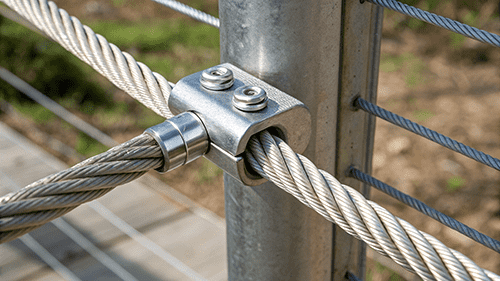
When wire rope is first put under load, the individual wires and strands settle into place. This initial elongation is known as "constructional stretch[^1]." A flexible rope, like 7x19, has many small wires that take longer to fully compact, leading to more stretch over time. This results in sag. The 7x7 construction, with its fewer, thicker wires, is far more rigid. It settles less, meaning once you apply the correct tension during installation, it stays that way. This rigidity is the most important factor for a railing system. The goal is to create a secure barrier that doesn't feel loose or flimsy. Using a rope that is too flexible undermines this goal entirely, leading to a system that fails both aesthetically and functionally.
| Rope Construction | Flexibility | Constructional Stretch | Best Use for Railings |
|---|---|---|---|
| 1x19 Strand | Very Stiff | Lowest | Excellent, but less common |
| 7x7 Wire Rope | Stiff | Low | Industry Standard |
| 7x19 Wire Rope | Very Flexible | High | Not recommended |
How does 7x7 construction improve a railing's lifespan outdoors?
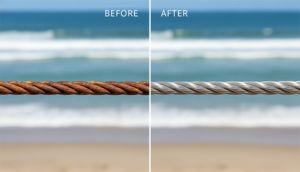
Outdoor railings face a constant attack from rain, salt air, and physical contact. This exposure can quickly lead to ugly rust stains, corrosion, and fraying wires. The rope needs to be built to endure this abuse.
The 7x7 construction is made with thicker outer wires compared to a more flexible rope like 7x19. These larger wires provide a more durable surface with superior resistance to abrasion, friction, and general weathering, protecting the cable's structural integrity for many years.
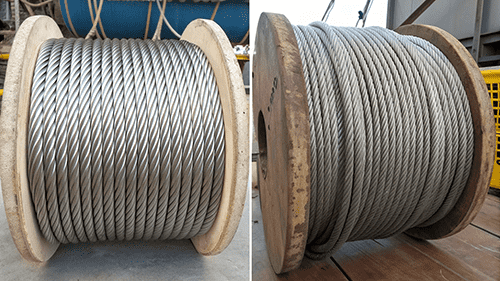
Think of the outer wires as the rope's first line of defense. In a railing, this surface is constantly exposed. People lean on it, items brush against it, and pollutants in the air settle on it. The thicker wires of a 7x7 cable provide more material to withstand this wear and tear. But the construction is only half the story; the material itself is just as critical. Many suppliers will sell Type 304 stainless steel as a default. It works well for indoor applications, but if your project is outdoors, especially near the coast, you must use Type 316. The addition of molybdenum in Type 316 gives it far superior corrosion resistance against chlorides, like salt. I have seen projects where the wrong grade was used, and within a year, the railing was covered in "tea staining," or small rust spots. At iRopeWork, we always ask where the railing will be installed. We insist on Type 316 for all outdoor projects and provide a Material Test Certificate (MTC) to prove you are getting what you paid for.
Is 7x19 ever a good choice for railings?
You might see 7x19 wire rope sold for railing kits, which can be confusing. If 7x7 is the standard, why would anyone use the more flexible option? The reason is usually about ease of installation, not performance.
Frankly, 7x19 wire rope is a poor choice for railing applications. Its high flexibility leads to excessive stretch and sag over time. It is sometimes used in DIY kits because it is easier to bend and cut, but this convenience comes at the cost of long-term stability and safety.
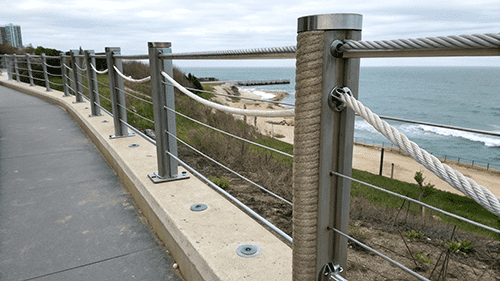
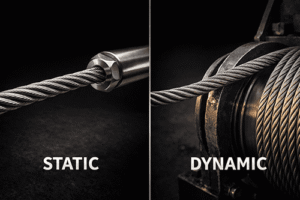
The main appeal of 7x19 rope is its pliability. It can be easily bent around the sharp corners found in some terminal fittings without kinking. For an installer without specialized tools, this might seem like an advantage. However, this is a critical engineering trade-off. A professional-grade railing system relies on tension for its safety and appearance. Using a flexible rope that is designed for running over pulleys is the wrong tool for a static tension application[^2]. Over time, the 7x19 rope will stretch, requiring constant re-tensioning to remove sag. Furthermore, its thinner outer wires are more susceptible to damage from abrasion. A railing is a long-term structural installation. As an engineer or project manager, my advice is to always prioritize the long-term performance of the system over a minor convenience during installation. The industry standard exists for a reason: 7x7 construction provides the necessary stiffness that a railing requires to function correctly.
Conclusion
For safe, durable, and clean-looking cable railings, the industry standard is 7x7 stainless steel wire rope. Its essential stiffness prevents sag, and its robust construction ensures long-term resistance to wear.
[^1]: Understanding constructional stretch is crucial for selecting the right wire rope for your railing system. [^2]: Understand the concept of static tension applications to better grasp the engineering behind cable railings.