Choosing the right wire rope fitting[^1] isn't just about finishing a job; it's about safety and reliability. A termination that fails can lead to catastrophic results. How do you decide between a permanent, machine-pressed fitting and one you can attach by hand?
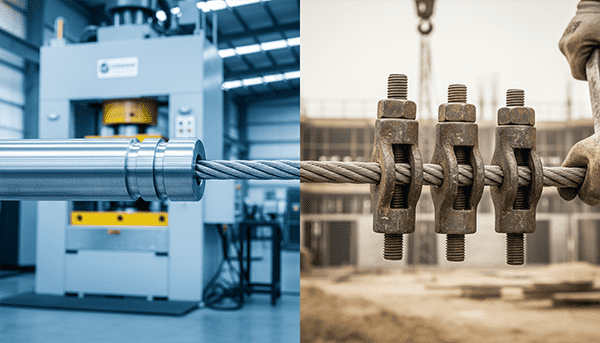
For permanent, structural rigging[^2], professionally swaged fittings[^3] are safer. They are machine-pressed with hundreds of tons of force, creating a solid, consistent termination that retains over 90% of the wire rope's original strength. Mechanical fittings are convenient but rely entirely on correct manual installation.
This is a choice that project managers and engineers, like my longtime client Mr. Xu, have to make all the time. On one hand, the precision of a factory-made assembly is undeniable. On the other, the flexibility to make adjustments on-site is invaluable. As someone who has spent 17 years in this industry, I can tell you that the answer depends entirely on the application. Understanding the fundamental differences in how these terminations work is the key to making the right, and safest, choice for your project.
Why is a Factory Swage Stronger Than a Field Installation?
You need a termination you can absolutely trust for a critical structural load. You look at a hand-tightened clamp and wonder, can this really be as strong and reliable as a connection made by a massive machine? The doubt itself can be unsettling.
A hydraulic press[^4] applies consistent, overwhelming force that physically changes the metal of the fitting, molding it into the wire rope for a near-perfect bond. This process is highly repeatable and verifiable, retaining the highest possible breaking strength. Hand tools simply cannot replicate this level of force or precision.
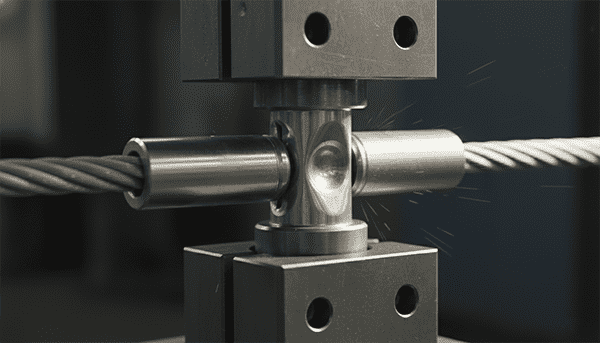
Let's break down what's happening during a hydraulic swage. The process is a type of "cold forming[^5]." We place a stainless steel terminal, like an eye or a stud, over the wire rope and put it into a set of specialized dies in our 500-ton hydraulic press[^4]. The machine then applies immense, controlled pressure. This force is so great that it causes the solid steel of the fitting to flow like a thick liquid. It moves into every tiny gap and valley between the individual wires of the rope. When the pressure is released, the fitting and the wire rope have essentially become one solid piece of steel. This connection is incredibly strong and has a clean, professional finish.
To ensure every single swage is perfect, we perform a 100% check using a go/no-go gauge[^6]. This is a simple but critical quality control tool. After pressing, we check if the swaged section can pass through the "go" slot but not the "no-go" slot. This instantly verifies that the final diameter is within our strict engineering tolerances[^7], guaranteeing a correct press every time. Mr. Xu would appreciate this; it's a system based on data, not guesswork.
| Feature | Hydraulic Swaging (Machine) | Mechanical Fittings (Hand Tools) |
|---|---|---|
| Connection Method | Cold forming metal under high pressure. | Friction and clamping force from bolts. |
| Strength Retained | 90-100% of wire rope's breaking strength. | 80-90%, but highly dependent on installation. |
| Consistency | Extremely high and repeatable. | Varies based on installer skill and tools. |
| Verification | Go/No-Go Gauge, Proof-Loading. | Torque wrench settings, visual inspection[^8]. |
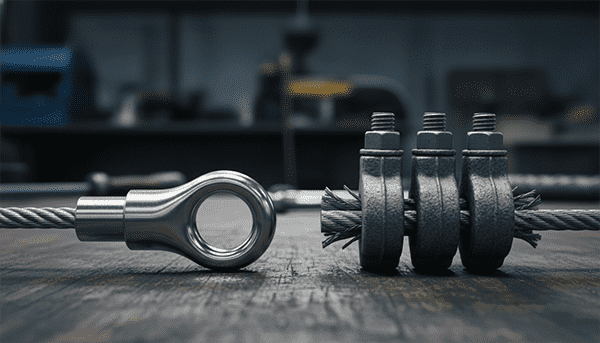
In contrast, a mechanical fitting, like a wire rope clip, relies purely on clamping force from bolts to create friction. The strength of that connection depends on how well the installer tightened those nuts. Was the torque correct? Was the clip oriented the right way? There are too many human variables for my comfort in critical applications.
When Is a Mechanical Fitting the Right Choice?
You're out on a job site, and a railing cable is just a bit too long. You need to trim it and terminate it right there. The thought of having to go back to a workshop with a massive press for a simple adjustment is frustrating and causes delays.
Mechanical fittings are the best solution for applications that require on-site assembly, adjustability, or temporary installation[^9]. Their primary benefit is convenience, allowing anyone with basic hand tools to create a termination without the need for heavy, specialized machinery.
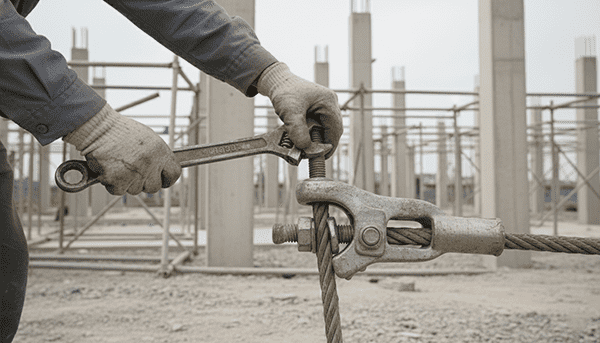
There are many situations where a mechanical fitting is the perfect choice. Think about tensioning a garden trellis, setting up temporary safety barriers[^10], or creating mock-ups where the final lengths aren't yet known. In these cases, the ability to assemble and disassemble the connection with a simple wrench is a huge advantage. These fittings allow for fine-tuning and adjustments in the field, which is something a permanently swaged fitting cannot offer.
However, this convenience comes with a great deal of responsibility. The safety of a mechanical connection rests entirely in the hands of the installer. I have seen far too many failures caused by simple mistakes. With U-bolt style clips, for example, there is a famous rule: "Never saddle a dead horse." This means the U-bolt must go over the "dead end" or tail of the rope, while the "saddle" part must press on the "live," load-bearing section. Installing it backward can crush and weaken the main cable, drastically reducing its strength. Furthermore, the nuts must be tightened to a specific torque value and re-checked periodically, as they can loosen over time due to vibration and load changes. These fittings are also bulkier and can be more expensive per unit than swage-type terminals. They are a great tool, but one that requires knowledge and care to use safely.
How Can You Verify the Safety of Your Wire Rope Assembly?
Whether the termination was made in a factory or on a job site, you now have a finished assembly in your hands. A nagging question remains: is it truly safe? How can you be confident that it will hold the load it was designed for without failing?
For swaged fittings[^3], a simple pass with a go/no-go gauge[^6] provides instant verification of a correct press. For ultimate assurance in any critical application, a proof-load test[^11], which pulls the assembly to a specified percentage of its breaking strength, is the definitive method.
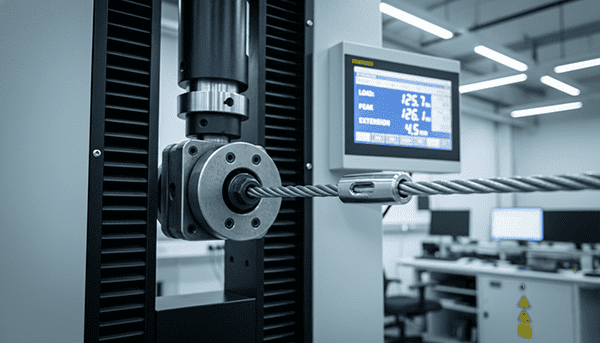
At iRopeWork, our process is built on verification. As I mentioned, every single swaged assembly we produce is checked with a go/no-go gauge[^6]. This is our first line of defense and ensures manufacturing consistency. For customers with critical safety requirements, such as those in the lifting or architectural suspension industries, we can take it a step further. We can perform a proof-load test[^11] on the assembly. This involves putting the cable into a special machine called a tensile tester[^12] and pulling on it with a specific force, for example, 50% of its rated breaking strength. If the assembly holds this load without any sign of damage or slippage, it passes the test. This is not a guess; it is a verifiable certificate of the assembly's strength.
For mechanical fittings[^13], verification is about process and inspection. The installer must use a calibrated torque wrench[^14] to tighten the nuts to the manufacturer's specification. After installation, a visual inspection[^8] is critical. Check that the clips are oriented correctly, spaced properly, and that the rope hasn't been kinked or damaged by over-tightening. For any application that involves safety, these fittings should be regularly re-inspected. My philosophy, and the foundation of iRopeWork, is that you should never have to guess about safety. You should have data, a clear process, and reliable components.
Conclusion
Swaged fittings provide superior, verifiable strength for permanent jobs. Mechanical fittings offer essential field flexibility. Always choose based on your project’s safety requirements and verify every installation.
Need custom-length swaged assemblies with guaranteed quality? See how we make them in our processing video.
[^1]: Understanding wire rope fittings is crucial for ensuring safety and reliability in rigging applications. [^2]: Understand the significance of structural rigging in ensuring safety and reliability in construction projects. [^3]: Explore the benefits of swaged fittings, which provide superior strength and reliability for critical applications. [^4]: Discover how hydraulic presses create strong connections in wire rope fittings through immense pressure. [^5]: Gain insights into cold forming, a process that enhances the strength and integrity of metal fittings. [^6]: Understand the importance of go/no-go gauges in ensuring the quality and safety of wire rope assemblies. [^7]: Learn about engineering tolerances and their critical role in ensuring the safety and reliability of fittings. [^8]: Understand the importance of visual inspections in maintaining safety and reliability in wire rope fittings. [^9]: Learn about the advantages of temporary installations and their flexibility in various construction scenarios. [^10]: Explore the role of safety barriers in construction sites and their importance for worker safety. [^11]: Learn about proof-load testing as a definitive method to verify the strength of wire rope assemblies. [^12]: Learn about tensile testers and their role in verifying the strength of wire rope assemblies. [^13]: Learn about mechanical fittings and their role in providing flexibility and convenience in wire rope terminations. [^14]: Explore the proper use of torque wrenches to ensure safe and reliable installations of mechanical fittings.