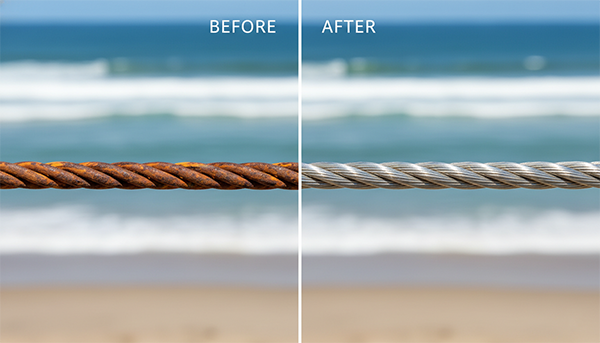
Your project is complete, but a few months later you get an angry call. Your client says the "rust-proof" stainless steel railings are showing ugly brown stains. Your reputation is suddenly at risk, and you start to question your supplier.
This discoloration, known as "tea staining," is not rust from the steel's core. It's a surface deposit caused by contaminants. Proper surface finishing[^1] and a simple cleaning routine are the keys to preventing it and keeping the steel looking pristine for years.
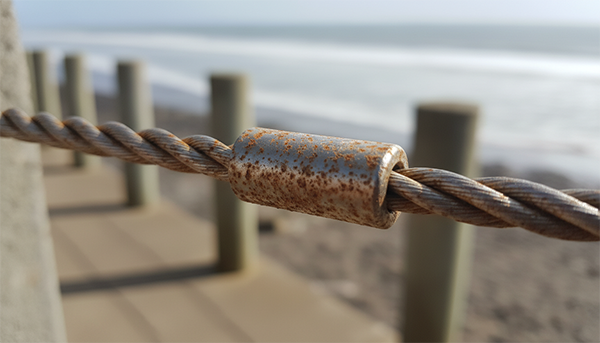
This is a frustrating situation for any contractor. You've invested in high-quality Grade 316 stainless steel[^2], exactly as specified for the coastal environment. Yet, here you are, defending your work against claims of poor quality. As someone who has been in the metal products industry for 17 years, I have seen this scenario play out many times. The good news is that there is a clear scientific reason for tea staining, and more importantly, there are straightforward ways to prevent it and fix it. It starts with understanding that the problem isn't deep in the metal, but right on its surface.
The Hidden Culprits: Are Surface Roughness and Contamination to Blame?
You chose the correct material, Grade 316, for its corrosion resistance, but it's still staining. This can make you feel like you were misled, as if the material itself failed. This is a common and costly misunderstanding.
The real issue is often the microscopic roughness of the steel's surface. A rougher surface provides tiny pits and valleys where corrosive particles like salt and iron dust can get trapped. These trapped particles corrode and stain the surface, not the stainless steel itself.
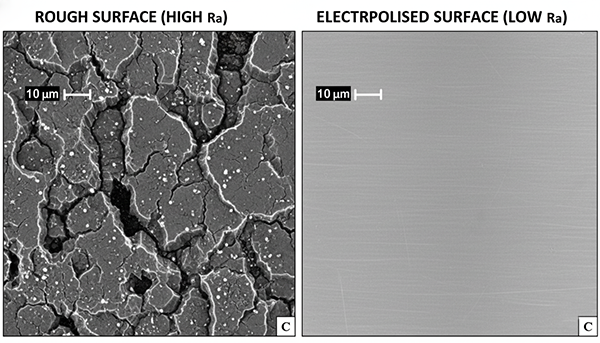
Let’s dive a little deeper into this. Every metal surface has a "surface roughness[^3]," which we measure in micro-meters and refer to as its Ra value. A wire rope, by its very nature of being drawn through dies, has a relatively high Ra value. Think of it like a mountain range on a microscopic level. These tiny valleys are perfect traps for airborne contaminants. In a coastal area, this means salt spray. In an industrial zone, it could be metallic dust from grinding or other activities. When these particles get lodged in the valleys and are combined with moisture, they begin to rust. This rust then leaches out and creates the brown "tea stain" you see on the stainless steel. The steel itself is fine, but it's being "painted" by the rust from the contamination sitting on it.
This is why, at iRopeWork, we take extra steps for orders destined for harsh marine environments. We offer an additional ultrasonic cleaning[^4] and passivation service. The ultrasonic bath dislodges any residual contaminants from the manufacturing process, and the passivation process[^5] chemically enhances the steel's natural, protective chromium-oxide layer[^6]. These are critical steps that many low-cost suppliers often skip. A smoother, cleaner surface is always the best defense.
| Surface Finish | How it Works | Best For |
|---|---|---|
| Standard Mill Finish | The basic, as-manufactured surface. | General, low-corrosion environments. |
| Passivation | A chemical treatment to enhance the protective layer. | Improving resistance on standard finishes. |
| Electropolishing | An electrochemical process that smooths the surface. | Maximum corrosion resistance in marine/harsh environments. |
Is Your Cleaning Schedule Enough to Prevent Staining?
You instructed your team to wipe everything down after the installation was complete. But now, six months later, the staining has appeared. Your client is unhappy, blaming your installation or your materials. This reflects poorly on your work.
Stainless steel is not "stain-proof"; it is "stain-less." It relies on a passive surface layer that needs oxygen to self-heal. A simple, regular cleaning schedule[^7] removes the corrosive deposits[^8] that block this process and cause staining.
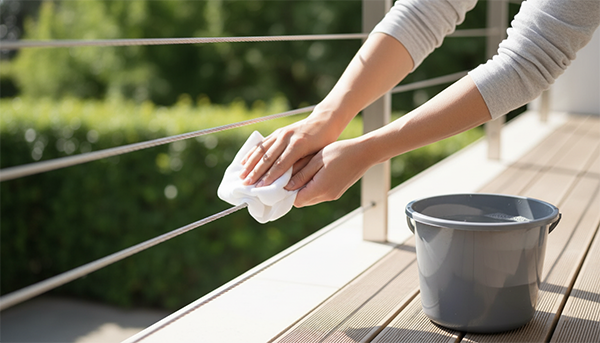
The protective layer on stainless steel is a remarkable thing. It's an invisible film of chromium oxide that instantly reforms when it's scratched, as long as it has access to oxygen. However, if you let a thick layer of salt, dirt, or grime build up on the surface, you are effectively starving the steel of the oxygen it needs to protect itself. Underneath this deposit, where oxygen is scarce, a small corrosion pit can form. This is the starting point for tea staining and more serious corrosion down the road.
I always advise my clients, like Mr. Xu, to provide a clear maintenance schedule[^9] to the end-user. It's the simplest way to avoid callbacks and ensure the project looks great for years. The key is that cleaning should be gentle. You should never use abrasive cleaners[^10], steel wool, or scouring pads, as these can scratch the surface and, even worse, embed iron particles that will become new sites for rust. Chlorine-based cleaners, like bleach, are also extremely damaging to stainless steel and must be avoided. Regular, gentle washing is all that is required to let the material do its job.
Here is a simple guide you can follow:
| Environment | Cleaning Frequency | Method |
|---|---|---|
| Indoor / Rural | Once or twice a year. | Wipe with a damp cloth, mild detergent if needed. |
| Urban | Every 6-12 months. | Wash with mild detergent and rinse with fresh water. |
| Coastal / Marine | Every 3-6 months. | Wash frequently with fresh water to remove salt deposits. |
| Industrial | Every 3-6 months. | Regular washing to remove chemical and particle deposits. |
Conclusion
Tea staining on stainless steel is a surface issue caused by contamination, not a material defect. It is easily prevented with the right surface finish and a simple, regular cleaning routine.
Want to educate your clients and prevent future complaints? Get our comprehensive "Stainless Steel Maintenance Guide" to share with them.
[^1]: Discover how proper surface finishing can enhance the longevity and appearance of stainless steel. [^2]: Learn why Grade 316 is preferred for marine applications and how it resists corrosion. [^3]: This resource explains the impact of surface roughness on corrosion and maintenance. [^4]: Find out how ultrasonic cleaning can enhance the durability and appearance of stainless steel. [^5]: Explore the significance of passivation in protecting stainless steel from corrosion. [^6]: Learn about the protective properties of the chromium-oxide layer and its importance. [^7]: A proper cleaning schedule is essential; this link provides guidelines for maintaining stainless steel. [^8]: Understanding corrosive deposits is key to preventing damage to stainless steel surfaces. [^9]: Discover how a well-planned maintenance schedule can keep stainless steel looking pristine. [^10]: This resource highlights the risks of using abrasive cleaners on stainless steel and offers safer alternatives.