The market is full of fake marine-grade steel that rusts quickly. You worry that a bad batch of shackles could ruin your company's reputation and cause safety failures.
To ensure you get high-quality AISI 316 rigging hardware[^1], always verify the Molybdenum content[^2] (2-3%), require salt spray test data[^3] for corrosion resistance, and demand lot-traceable tensile test reports[^4]. These steps filter out low-grade substitutes effectively.
I have spent 17 years in the metal industry. I started on the factory floor and built my own business. I have seen many distributors lose money because they trusted the wrong supplier. I want to share the specific technical details you need to check. This will help you keep your supply chain safe.
Why Is Molybdenum the Most Important Element in Your 316 Stainless Steel?
Suppliers often reduce expensive chemical elements to lower their costs. You cannot see the chemical composition with your eyes, so you might buy inferior steel without knowing it.
True AISI 316 stainless steel must contain 2% to 3% Molybdenum. This element provides the crucial resistance to pitting corrosion[^5] in saltwater environments. Without it, the steel is essentially just 304 grade.
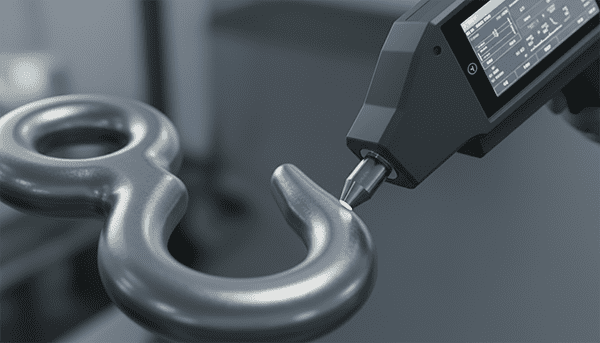
I need to explain why this specific element matters so much. In my factory, we use a spectrometer on every batch of raw material. This machine shoots a laser at the metal and tells us the exact mix of elements inside.
The biggest difference between standard 304 stainless steel and marine-grade 316 is Molybdenum (Mo).
- 304 Stainless Steel: Contains 0% Molybdenum. It is fine for kitchens or inland use.
- 316 Stainless Steel: Must have 2.0% to 3.0% Molybdenum.
Many "cheap" suppliers in China will sell you steel with only 0.8% or 1.2% Molybdenum. They label it as 316, but it is not. In the US market, your clients use these parts near the ocean. Salt water is very aggressive. If the Mo content is low, the chloride in the salt water attacks the metal. It creates small pits, like tiny holes, which weaken the part.
As a distributor, you must ask for a Mill Test Certificate[^6] or a Material Test Report. But do not just look at the title. Look at the "Chemical Composition[^7]" table. If the Mo column is less than 2.0%, reject it. It will rust, and your customers will blame you.
Here is a simple check list for the chemical report:
| Element | AISI 316 Requirement | Common Fake (304) |
|---|---|---|
| Chromium (Cr) | 16% - 18% | 18% - 20% |
| Nickel (Ni) | 10% - 14% | 8% - 10.5% |
| Molybdenum (Mo) | 2% - 3% | 0% |
How Does Mirror Polishing Affect the Lifespan of Marine Hardware?
Rough surfaces on metal parts trap salt, dirt, and moisture easily. If the finish is poor, even high-quality steel will rust much faster than you expect.
Mirror polishing[^8] does more than look good; it smooths the metal's surface to microscopic levels. This reduces crevices where corrosion starts. Always ask for Salt Spray Test reports of at least 72 hours.
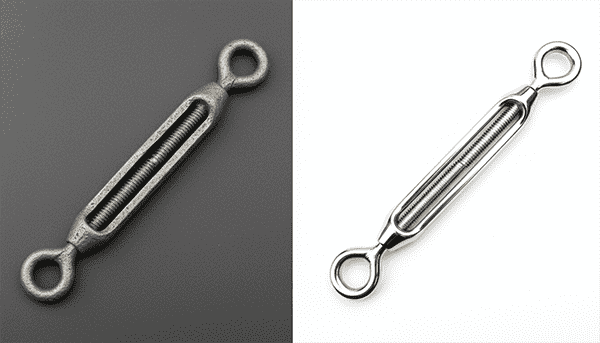
In my experience, many people think polishing is just for looks. This is wrong. Polishing is a critical protection method. When we manufacture rigging hardware, the raw casting has a very rough surface. If you look at it under a microscope, it looks like a mountain range with peaks and valleys.
These valleys catch salt water. When the water dries, the salt stays there. This high concentration of salt breaks down the "passive layer" of the stainless steel. The passive layer is a thin film that protects the iron inside from rusting.
Technical Requirements to look for:
- Electropolishing vs. Hand Polishing: Electropolishing is chemically efficient but sometimes dull. High-quality marine hardware usually combines machine tumbling with hand polishing to get a "Mirror Finish."
- Roughness Average (Ra)[^9]: For marine grade, we aim for a low Ra value. The smoother, the better.
- Passivation: After polishing, the part should be dipped in acid (passivation[^10]). This removes free iron from the surface.
You should ask your supplier for a Salt Spray Test Report. This test puts the hardware in a chamber with salty fog.
- Standard result: No red rust after 72 hours (neutral salt spray).
- Better result: No red rust after 120 hours.
If a supplier cannot show you this report, they are likely skipping the passivation[^10] step to save money. This saves them 5% cost, but reduces product life by 50%.
Do You Know the Critical Difference Between WLL and MBL?
Using the wrong load terms can lead to dangerous accidents and legal trouble. Many suppliers do not test their batches properly or confuse these safety limits.
The Working Load Limit (WLL)[^11] is the safe maximum weight for daily use, usually a fraction of the Minimum Breaking Load (MBL)[^12]. A reliable manufacturer provides a safety factor of 4:1 or 5:1 in their tensile test reports.
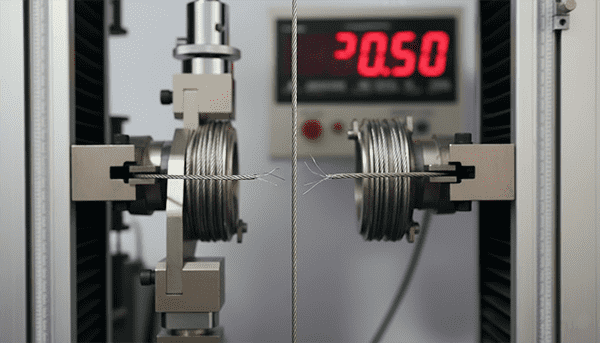
As an engineer, I see this confusion often. A buyer sees a shackle and asks, "How much can it hold?" A bad supplier says, "It breaks at 4 tons." The buyer thinks, "Great, I can lift a 4-ton boat." This is a fatal mistake.
You need to understand the Safety Factor (SF)[^13]. In the rigging industry, we usually use a safety factor of 4:1 or 5:1.
- MBL (Minimum Breaking Load): The force where the metal actually snaps or deforms permanently.
- WLL (Working Load Limit): The maximum weight you are allowed to lift safely.
The Formula: $$WLL = frac{MBL}{Safety Factor}$$
If a shackle breaks at 4,000 kg (MBL) and the Safety Factor is 4:1, the WLL is only 1,000 kg.
When you source from China, you must demand a Tensile Test Report[^14] for the specific batch you are buying. Do not accept a generic catalog number. The report must show the actual breaking point of a sample from your production run.
I recommend you verify these points in the report:
- Date of Test: Is it recent?
- Product Name: Does it match your order?
- Result: Does the MBL meet the standard specification?
Many low-quality factories do not even have a testing machine. They just guess the numbers based on the mold size. At iRopeWork, we break samples until destruction to prove the numbers are real. If a supplier refuses to show you a video of the test or a report, do not buy from them.
Why Should You Source Directly From a Chinese Manufacturer Instead of a Trader?
Middlemen add extra costs and hide the real source of your products. When you use a trader, you lose control over quality adjustments and technical improvements.
Sourcing directly allows you to control the raw material selection and production process. You get lower costs by removing distributor markups and faster communication regarding technical specifications and custom modifications.
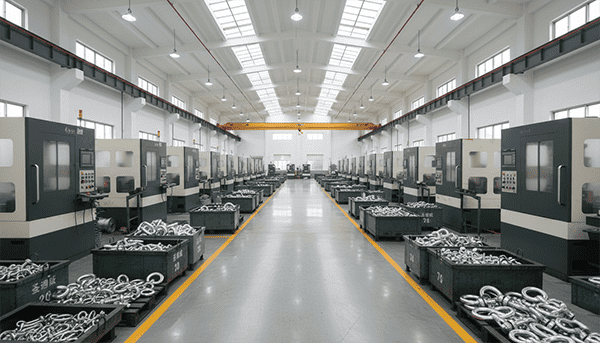
I ran a trading company before, and I own a factory now. I know how both sides work. When I was a trader, my goal was to find the cheapest factory to keep my margin high. I would often switch factories without telling the customer. This leads to the "inconsistent quality" problem that many US distributors face.
When you work with a genuine manufacturer like me, the process is different.
- Transparency: You know exactly what machine made your product. You know where the steel came from.
- Technical Language: When you talk to a trader, you talk to a salesperson. They say "yes" to everything. When you talk to a factory, you talk to an engineer or a boss who knows the limits. If a design is bad, I will tell you.
- Cost Efficiency: A trader adds 10% to 30% on top of the factory price. By going direct, you save this margin. You can keep it as profit or use it to buy better quality material.
However, finding a real factory is hard. Many "factories" on Alibaba are just trading companies in disguise. How to spot a real factory:
- Ask for a video call to see the production line in real-time.
- Ask technical questions about the tooling or mold design. Traders usually cannot answer these legally or technically.
- Check their ISO certification[^15]. Does the scope say "Manufacturing" or just "Sales"?
Direct sourcing takes more effort at the start. But strict control over the supply chain is the only way to guarantee the quality your US customers expect.
Conclusion
To secure your supply chain, verify Molybdenum content[^2], check for mirror polishing and passivation[^10], demand true tensile test reports, and source directly from manufacturers.
[^1]: Explore this link to understand the advantages of AISI 316 rigging hardware for marine applications. [^2]: Learn about the critical role of Molybdenum in enhancing corrosion resistance in stainless steel. [^3]: Discover how salt spray tests ensure the durability of marine hardware against corrosion. [^4]: Find out why these reports are essential for verifying the strength of rigging hardware. [^5]: Understand the mechanisms behind pitting corrosion and how to prevent it in marine environments. [^6]: Explore the importance of Mill Test Certificates in ensuring material quality. [^7]: Learn how to interpret chemical composition reports to ensure quality in steel sourcing. [^8]: Discover how mirror polishing enhances the lifespan and performance of marine hardware. [^9]: Learn about the significance of surface roughness in preventing corrosion. [^10]: Explore how passivation protects stainless steel from rust and corrosion. [^11]: Understand the importance of WLL in ensuring safe lifting practices. [^12]: Learn about MBL and its critical role in safety for rigging hardware. [^13]: Discover how Safety Factor calculations ensure safe usage of rigging equipment. [^14]: Find out why Tensile Test Reports are crucial for verifying the strength of rigging hardware. [^15]: Learn about the significance of ISO certification in ensuring manufacturing quality.